Creating Emotional Connection Communication Strategies for Participants and Horses
Understanding the Horse’s Perspective
Ever wonder what your horse is really thinking? In Horse Therapy, it’s not just about what we say or do, but how we interpret the subtle language of our equine partners. Understanding a horse’s perspective is foundational to creating a truly therapeutic environment, especially for our participants here in Ridgecrest. Horses, as prey animals, are incredibly attuned to their surroundings and the emotions of those around them. This inherent sensitivity is exactly what makes them such powerful co-facilitators in equine therapy. When we learn to “speak horse,” even in a simple, fundamental way, it deepens the connection and communication, making sessions far more impactful for everyone involved. It’s about building trust, creating safety, and fostering a relational space where healing can truly begin.
So, how do we begin to bridge that communication gap? It starts with mindful observation and a genuine desire to understand their world. We can’t expect horses to adapt completely to our human ways; rather, it’s our responsibility to meet them halfway, interpreting their signals, and responding in a manner that resonates with their natural instincts. This empathetic approach is a cornerstone of our Horse Therapy programs, ensuring that the horses are comfortable and willing partners, which, in turn, allows participants to achieve deeper therapeutic outcomes.
Deciphering Equine Body Language and Cues
Horses are masters of non-verbal communication, constantly broadcasting their feelings and intentions through their bodies. For anyone involved in therapeutic riding tips, learning to decipher these signals is critical. Think about it: a horse’s ears pivoting forward might indicate curiosity or alertness, while pinned-back ears are a clear sign of irritation or discomfort.
Their head carriage, for instance, often shows their level of relaxation; a low, soft head can mean contentment, whereas a high head, with tension in the neck, sometimes signals anxiety or alarm. And let’s not forget the eyes; soft, blinking eyes often indicate relaxation, but wide, staring eyes with a visible white sclera often signal fear or stress. The subtle twitch of a nostril or the tension in their lips can also communicate volumes.
Observing a horse’s tail is another key indicator. A swishing tail can mean anything from swatting flies to genuine agitation or annoyance. A tail tucked tightly between the legs is a strong sign of fear or submission.
Even the way a horse shifts its weight or holds tension in its muscles gives us clues about their comfort level. For our therapists and participants, becoming adept at reading these subtle cues is paramount. It allows us to recognize when a horse might be feeling overwhelmed or uncomfortable in a session, enabling us to adjust the activity, the environment, or our approach to ensure their well-being and maintain a positive experience for both the horse and the client.
This continuous feedback loop of observation and adaptation creates a dynamic and responsive therapeutic setting.
Recognizing Emotional States in Horses
Beyond isolated body language cues, recognizing a horse’s overall emotional state is about piecing together the whole picture. Just like humans, horses experience a range of emotions: joy, fear, anxiety, curiosity, relaxation, and even sorrow. For instance, a horse that is relaxed might have a soft gaze, a slightly drooping lower lip, nostrils that are relaxed and not flared, and a steady, rhythmic breath.
They might also stand with one hind leg cocked, indicating comfort. Conversely, a horse experiencing anxiety or fear might exhibit restlessness, heightened head carriage, wide eyes, flared nostrils, and tense muscles, often accompanied by quick, shallow breathing. They might be prone to startle or “spook” at simple, everyday stimuli.
In our therapeutic riding programs, understanding these emotional states is crucial for safety and effectiveness. A horse that is feeling overwhelmed or stressed won’t be as receptive to interaction, potentially hindering the therapeutic process for the participant. For example, if a horse is showing signs of anxiety during a grooming session, a skilled facilitator might adjust their approach, perhaps by using slower, softer strokes, offering a reassuring voice, or even changing the grooming tools. This responsiveness ensures the horse feels heard and respected, which in turn models empathy and awareness for the human clients. It creates a space where both species can feel safe enough to be vulnerable and engage in the healing process. We often see how these intuitive responses to a horse’s emotions teach clients vital lessons in emotional regulation and empathy themselves, forming a deep connection.
The Horse’s Natural Communication System
Horses communicate primarily through non-verbal means, relying heavily on subtle shifts in posture, gestures, and energy. This natural system is highly sophisticated and incredibly efficient within their herds. They use a complex interplay of sight, smell, and touch to convey messages.
For example, a dominant horse might communicate its status with a raised head and direct gaze, while a submissive horse might avert its eyes or lower its head. There’s a constant, nuanced dialogue happening within a herd, often without a single sound. When we step into this world during Horse Therapy, we’re essentially joining their conversation, albeit as a new, sometimes clumsy, participant.
Understanding this natural system helps us approach communication with our therapy horses in a way that resonates with them. Instead of relying solely on verbal commands (though those have their place), we learn to use our own body language, our energy, and our intention to communicate. This doesn’t mean we need to act exactly like a horse, but rather to be mindful of how our human actions are perceived through their natural lens. Loud voices, sudden movements, or a hurried demeanor can be perceived as threatening. Conversely, calm, deliberate movements, a soft voice, and a relaxed posture often help create a sense of safety and trust. This is part of what makes our programs, people, so effective in Ridgecrest. By honoring the horse’s natural communication methods, we facilitate an authentic connection that is truly transformative for our participants, allowing them to engage in a profound way that traditional therapies might not offer.
Foundation of Human-Horse Communication
Developing Self-Awareness and Intentionality
Understanding ourselves and our intentions is a critical first step in effective horse therapy, especially here in Ridgecrest, CA. Horses are incredibly perceptive; they don’t just react to what we do, but to how we do it and the energy behind our actions. For participants, this often means learning to recognize their own emotional state before approaching the horse. Are they feeling anxious, rushed, or calm and focused? This self-awareness directly impacts the horse’s perception of them.
Intentionality, then, is about consciously choosing how to engage. It’s not just about leading the horse, but leading with purpose and clarity. When a participant is fully present and intentional in their movements and thoughts, the horse feels that.
This creates a much clearer line of communication. Think about it: a hesitant, unclear request from a rider can confuse a horse, leading to frustration for both. But a calm, deliberate request, even a simple one, often gets a positive response.
This nuanced interaction is key to what we do at THOR Ridgecrest, and it’s a foundational element of all our equine therapy programs. It’s also often one of the first things we focus on in sessions, helping participants tune into their own internal landscape.
For those involved in programs like our veterans & ptsd, this practice of developing self-awareness and intentionality extends beyond the arena. It helps participants carry these insights into their daily lives, improving their overall emotional regulation and communication skills. It’s a powerful tool for personal growth, really.
The Role of Non-Verbal Cues from Humans
Horses are masters of non-verbal communication, relying heavily on body language to understand their world and each other. This means that in horse therapy, our non-verbal cues as humans are incredibly powerful, sometimes even more so than our words. We often explain to participants that their posture, breathing, and even the tension in their muscles can speak volumes to a horse, without a single word being uttered.
Consider the simple act of approaching a horse. If someone approaches with hunched shoulders, a quick pace, and shallow breathing, the horse might interpret that as a threat or a sign of anxiety. On the other hand, a relaxed posture, steady breathing, and an open, calm approach signal safety and build trust. These subtle differences aren’t just theoretical; they are immediately observable in the horse’s reaction. We often guide clients through indoor vs outdoor, focusing on how these cues remain consistent, regardless of the environment.
In practice, this looks like guiding participants to be mindful of their physical presence. It means teaching them to use their body as a tool for communication – to invite, to reassure, to guide, or to simply be present. We might practice walking beside a horse, focusing on matching its pace and rhythm, or learning to use a gentle touch rather than pulling on a lead rope.
These are the building blocks of an authentic connection. It’s about creating a dialogue without words, and that’s pretty effective when you consider the communication style of horses.
Cultivating Presence and Mindfulness in Interaction
In our therapeutic riding tips, we often emphasize that being truly present and mindful is arguably the most essential communication skill when working with horses. In our busy world, it’s easy to be distracted, thinking about what happened yesterday or what needs to happen tomorrow. But horses live completely in the present moment. They demand that we meet them there.
For participants, cultivating presence means putting aside external worries and internal chatter. It’s about being fully engaged in the “here and now” with the horse. This isn’t just a nice idea; it has a profound effect on the interaction. When a client is truly focused, aware of their own body, the horse’s body, and the immediate environment, the connection becomes much deeper. The horse feels acknowledged, and the client feels a heightened sense of awareness and calm. This is often the magic of horse therapy, and it’s a big part of why programs like ours at THOR Ridgecrest are so impactful.
Mindfulness practices, such as focused breathing or sensory awareness exercises, are often integrated into sessions to help clients achieve this state. For example, before beginning a session, we might ask a client to take a few deep breaths, feeling their feet on the ground and noticing the sounds and smells around them. This simple act helps ground them in the present. This practice is incredibly beneficial, not just for the horse-human connection, but also for the client’s overall well-being, helping to reduce stress and improve focus. It’s about creating a space where both human and horse can be truly seen and heard, and that’s a powerful thing, especially in therapy.
Building Trust and Reciprocity
Strategies for Establishing Psychological Safety
Creating an environment where both human participants and horses feel psychologically safe is paramount in successful equine therapy sessions. For participants, this often starts with clear communication about what to expect, a transparent explanation of the horse’s routine, and understanding boundaries. We’re talking about reducing the unknowns, you know?
For many of our clients in Ridgecrest, simply knowing the structure of a session can significantly lower anxiety. We might start with a simple greeting ritual with the horse, or a few minutes of quiet observation before any direct interaction. The goal is to build a sense of predictability and control, which reduces perceived threat.
This extends to the horse as well. Horses are incredibly sensitive creatures, and their sense of safety directly impacts their willingness to engage. We make sure our horses are well-rested, properly fed, and have consistent routines outside of therapy hours.
An agitated or stressed horse won’t be an effective partner in therapy, period. We also ensure their physical environment is calm and free from sudden loud noises or unexpected movements. Think about it: a consistent arena space, familiar smells, and predictable interactions from staff all contribute to a horse feeling secure.
This sense of security then naturally extends to the participants working with them.
For example, if a participant is nervous about approaching a horse, I often suggest just observing the horse grooming or eating from a safe distance. This non-pressured interaction allows the participant to acclimate and the horse to remain undisturbed. It also helps participants to begin understanding equine communication strategies subtly, seeing how the horse reacts to its environment and other horses.
We’ve found that this initial period of observation, sometimes just 5 or 10 minutes, can create a much more relaxed and productive session overall. It’s all about laying that secure groundwork before we ask for more involved engagement.
The Art of Active Listening and Responsiveness
Active listening in the context of horse therapy isn’t just about hearing words; it’s about observing, interpreting, and responding to both human and equine cues. For participants, it means paying attention to their body language, vocal tone, and any signs of discomfort or engagement. Are they tensing up as they approach the horse?
Are their eyes darting around? These are important signals. We encourage participants to articulate their feelings, but also teach them to recognize what their body is telling them.
With horses, active listening becomes deeply observational. We watch their ears, tail, and muscle tension. Is their ear flicking towards us, indicating attention?
Is their tail swishing rapidly, suggesting agitation? A horse’s subtle shift in weight can tell us a lot about their comfort level. Responsiveness means adjusting our approach based on these observations.
If a horse seems agitated, we might slow down our movements, reduce direct eye contact, or even step back for a moment. This constant feedback loop of observation and adjustment creates a dynamic, respectful interaction, which is crucial for building trust.
This might look like a participant trying to brush a horse, and the horse pins its ears slightly. Instead of pushing through, the therapist would guide the participant to acknowledge that signal: “What do you notice about his ears right now?” And then suggest a change, like using gentler strokes or moving to a different spot. This immediate, responsive adjustment shows the horse that its communication is being heard and respected, which deepens the connection. It also teaches the participant about boundaries and empathy in a very tangible way. It’s a powerful lesson in non-verbal communication that can really transfer to their human relationships.
Encouraging Voluntary Engagement and Partnership
True partnership with a horse, especially in a therapeutic setting, hinges on voluntary engagement. We never want to force interaction. Instead, we create invitations for the horse to participate, making the experience positive and rewarding.
This isn’t just about treats, though positive reinforcement certainly plays a role. It’s about creating a desire in the horse to be with the participant. That’s where the real magic happens.
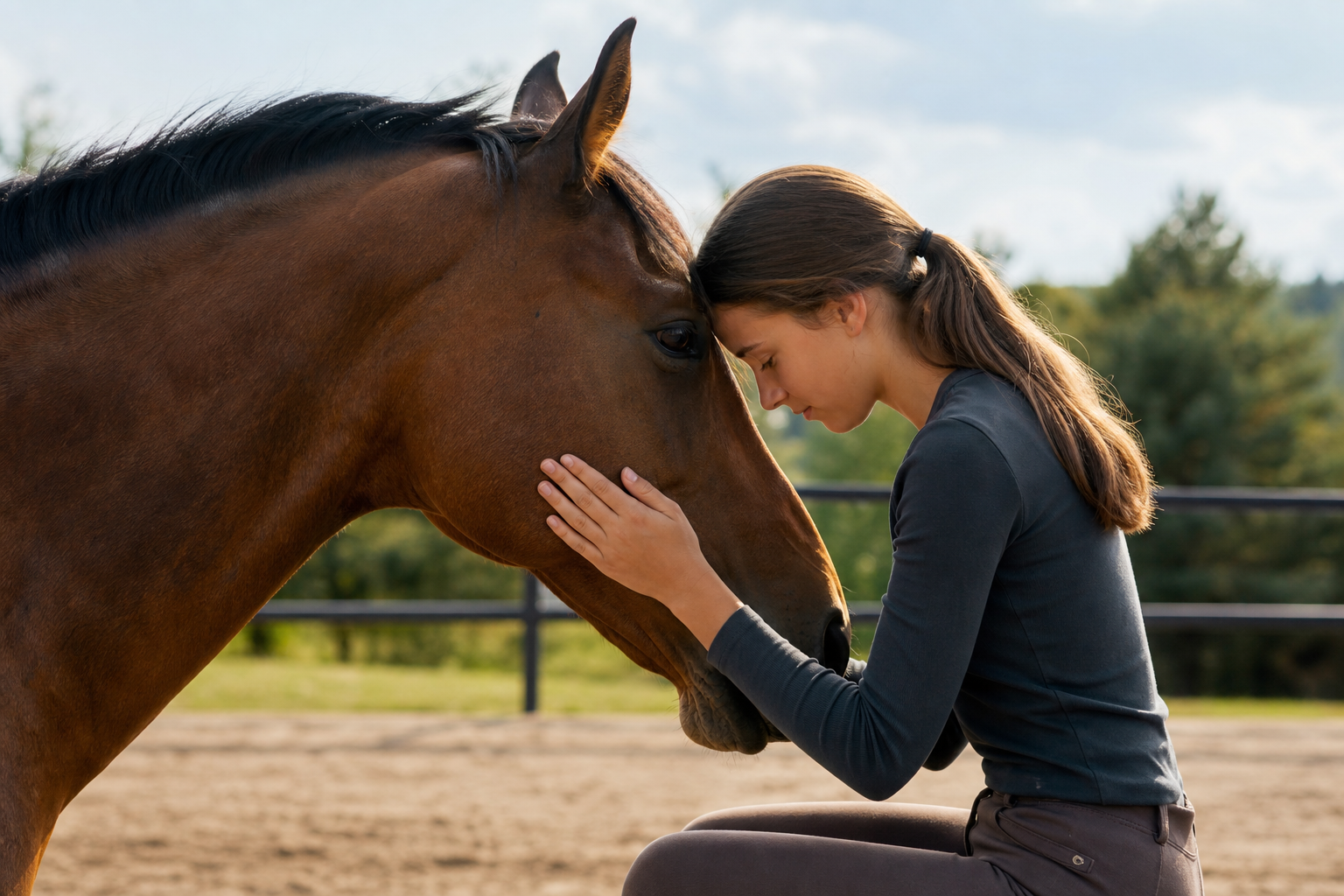
For instance, during grooming, we might allow the horse to choose which brush it prefers, or let it move away for a moment and then return if it feels comfortable. This respect for their autonomy builds trust. When a horse voluntarily approaches a participant, or offers its head for a caress without being asked, that’s a significant win. It demonstrates that the horse feels safe, heard, and that it enjoys the interaction. These moments are incredibly impactful for our clients; they create a profound sense of mutual respect and accomplishment. Many of our participants, especially those undergoing ptsd treatment, find this voluntary engagement deeply healing, as it often provides a sense of unconditional acceptance they may not experience elsewhere.
This principle extends to ridden activities too. Rather than simply instructing a participant to make the horse move, we guide them in understanding how their own energy and subtle cues can encourage the horse. This might involve a soft nudge, a slight shift in weight, or specific breathing. When the horse responds willingly, it creates a powerful feeling of partnership for the rider. It’s not about dominance; it’s about collaborative communication, a dance where both parties are attuned to each other. This kind of interaction, where the horse is an active and willing partner, is foundational to the unique benefits of Horse Therapy, especially here in Ridgecrest, where we strive to foster deep connections. It’s truly something beautiful to witness.
Advanced Communication Techniques for Deeper Connection
Utilizing Mirroring and Co-Regulation Practices
Mirroring and co-regulation are powerful advanced communication techniques in equine therapy because they bypass purely verbal communication and tap into a horse’s natural herd behavior. When a participant intentionally (or even unintentionally) mirrors a horse’s calm breathing, relaxed posture, or rhythmic movements, it creates an immediate, non-verbal connection. This isn’t about mimicking for the sake of it, but rather aligning one’s internal state with the horse’s.
For example, if a participant starts breathing deeply and slowly, the horse might often respond by deep breathing as well. This subtle alignment builds immediate rapport and tells the horse, “I understand you, and I am safe.”
Co-regulation takes this a step further. It’s the process by which a more regulated nervous system helps to bring another less regulated nervous system into a state of calm. In the context of Horse Therapy in Ridgecrest, CA, participants who might experience anxiety or heightened stress can find themselves co-regulating with the peaceful, grounded energy of a horse.
Our horses are specifically chosen and trained for their calm dispositions, which helps create a stable, soothing environment. This process actually helps participants learn to self-regulate by experiencing it firsthand with a horse, a powerful lesson that translates to daily life far beyond the arena.
The goal is to create a symbiotic relationship where both horse and participant influence each other positively. If a participant starts out agitated, simply spending time near a calm horse and consciously trying to match its slowed pace and relaxed demeanor can initiate this co-regulation. It’s a very organic, almost primal communication, and it often creates a felt sense of safety and belonging that words alone cannot achieve. This is particularly effective for clients who might struggle with traditional talk therapy, providing a very real, physical experience of emotional balance.
Navigating Challenging Behaviors Through Understanding
In Horse Therapy, “challenging behaviors” from horses are almost always a form of communication, not defiance. Advanced communication techniques involve understanding what the horse is trying to tell us when it pulls away, spooks, or shows reluctance. For instance, a horse might shift its weight, pin its ears slightly, or swish its tail more vigorously.
These are subtle cues that we teach participants and facilitators alike to recognize. Instead of viewing these as obstacles, we see them as invitations to adjust our approach.
Addressing these behaviors effectively means stepping back and asking, “What is the horse reacting to?” Is it a sudden noise outside the arena walls in Ridgecrest? A particular type of equipment that feels uncomfortable? Perhaps the client’s energy is too high or too low for that horse at that moment?
Our programs emphasize keen observation and responsive action. If a horse seems agitated during a session, we might often ask the client to pause, take a few deep breaths, and simply “be” with the horse for a few minutes without expectation. This often diffuses the tension and allows the session to continue positively.
The beauty of this approach is that it teaches participants invaluable lessons in empathy, patience, and non-verbal communication. They learn to adjust their own actions and expectations based on another living being’s feedback. This process helps clients develop a deeper understanding of boundaries – both the horse’s and their own – and practice respectful engagement even when faced with perceived resistance. It’s a powerful metaphor for navigating complex relationships in their personal lives, fostering resilience and adaptable communication strategies.
Facilitating Emotional Release and Processing
One of the most profound aspects of equine therapy is its capacity to facilitate emotional release and processing for participants. Horses are incredibly sensitive to human emotions, often mirroring them or responding in ways that bring those emotions to the surface. Advanced communication strategies in this context involve creating a safe and non-judgmental space where these emotions can emerge and be processed with the guidance of a trained facilitator. For many clients, especially those with trauma, processing emotions can be overwhelming, but the presence of the horse creates a unique buffer.
For example, a participant might be grooming a horse, and the horse’s calm, rhythmic breathing might trigger a memory or a feeling of sadness. Instead of suppressing it, the facilitator guides the participant to acknowledge the feeling, perhaps by asking, “What are you noticing in your body right now?” or “What might the horse be sensing from you?” The horse, by simply being present and accepting, often provides the unconditional support needed for a client to feel safe enough to explore these emotions. This isn’t about the horse fixing the emotion, but rather creating the ideal environment for the client to process it themselves.
This type of communication goes beyond words; it’s about energy, presence, and shared experience. The horse acts as a living, breathing biofeedback mechanism, helping participants become more attuned to their own internal states. Whether it’s anger, fear, grief, or joy, the horse’s honest and immediate reactions provide clear feedback, helping participants to understand their emotional impact on others and how to regulate those emotions.
It becomes a concrete, physical practice of emotional literacy. This deep, non-verbal connection can be incredibly therapeutic, allowing for breakthroughs and healing that might be difficult to achieve in conventional settings for many of our participants in Ridgecrest.
Integrating Communication Skills in Therapeutic Settings
Applying Principles in Equine-Assisted Learning
Integrating sophisticated communication strategies isn’t just theory; it’s the bedrock of effective Equine Therapy. In Ridgecrest, our programs at THOR often see participants develop profound insights by applying these principles in real-time. For instance, a simple exercise like leading a horse through an obstacle course without a halter or lead rope (that’s right, just body language and intent!) demands an entirely new level of communication.
Participants learn quickly that aggression or frustration yields no results, but clear, consistent, and patient signals create a willing partnership. It’s about subtle shifts in body posture, eye contact, and energy. We’re not teaching tricks; we’re facilitating an understanding of non-verbal cues that are universally crucial for building trust, whether with a horse or another human.
This hands-on application makes the learning incredibly tangible and impactful. It’s also fascinating to see how the horse, in its honesty, mirrors the participant’s internal state, providing immediate, unbiased feedback.
Consider a shy client who might initially struggle with verbal communication. When placed in a therapeutic riding session, they learn to project their intentions through their seat, leg aids, and even their breath. The horse responds to this internal communication, creating a feedback loop that builds confidence in the rider’s ability to influence their environment.
This is more than just riding; it’s about understanding influence and connection. We often observe participants generalize these equine communication strategies to their daily lives, improving difficult conversations or asserting themselves more effectively without verbal confrontation. The beauty of these programs is how they offer a safe, judgment-free space for experimentation, where the consequences of miscommunication are manageable and the rewards of successful connection are deeply felt.
The principles of active listening, clear boundaries, and empathetic response become ingrained, shaping a more conscious approach to all interactions, not just those with horses.
Enhancing Participant Outcomes Through Conscious Interaction
The goal of our Equine Therapy programs in Ridgecrest is always to enhance participant outcomes, and conscious interaction with horses is a primary driver. We’ve seen firsthand how focusing on precise, intentional communication directly correlates with breakthroughs. For example, a participant dealing with anxiety might be instructed to simply walk beside a horse, matching its pace and energy.
This seemingly simple task requires immense present-moment awareness and attunement, forcing the client to regulate their own breathing and energy instead of becoming overwhelmed by their thoughts. The horse, being a sensitive prey animal, immediately picks up on erratic breathing or a tense posture. When the client consciously adjusts, the horse’s demeanor softens, providing immediate, positive reinforcement.
This physical and emotional synchronization creates a powerful sense of calm and control for the client.
Another powerful example lies in teaching participants to “ask” a horse for a specific action, like moving backward or pausing, through subtle shifts in body language rather than pulling on a lead rope. This “asking” versus “telling” paradigm is fundamental to building a true partnership and is a cornerstone of our Horse Therapy approach. It teaches patience, respect, and the importance of observation.
When a horse voluntarily responds to a gentle suggestion, the sense of accomplishment for the participant is immense, boosting self-efficacy and reducing feelings of helplessness. This conscious interaction often reveals underlying communication patterns that clients might exhibit in other areas of their lives, providing a unique opportunity for immediate awareness and modification. It’s not just about managing a horse; it’s about managing oneself in relation to a powerful, sentient being, and learning to harness that energy for positive results.
This focus on individual interaction brings about tangible improvements in emotional regulation and interpersonal skills, making our programs incredibly effective.
Ethical Considerations in Facilitated Horse-Human Partnerships
When we facilitate horse-human partnerships in our Equine Therapy programs, ethical considerations are paramount. We’re not just working with clients; we’re integrating highly sensitive, sentient animals into a therapeutic process. This means ensuring the well-being of the horse is always at the forefront.
A critical ethical principle is respecting the horse’s agency and ensuring it’s a willing participant, not merely a tool. Our experienced staff are adept at reading each horse’s daily mood and energy level, ensuring that only horses who are comfortable and engaged are selected for sessions. This pre-session assessment helps maintain an environment where both horse and human feel safe and respected.
We use communication techniques that encourage voluntary participation from the horse, rather than coercive methods. For example, rather than forcing a horse into an interaction, we create an inviting space where the horse feels comfortable approaching and engaging on its own terms.
Another crucial ethical facet is the concept of “do no harm.” This extends to avoiding situations where a client’s emotional state might overwhelm or stress a horse. Our facilitators are trained to intervene and modify sessions as needed, protecting both the client and the animal. This might involve redirecting a client’s energy, offering a different activity, or simply pausing for a moment of quiet reflection for both horse and client.
We also ensure that our horse partners receive excellent care, including proper nutrition, veterinary attention, and ample downtime away from therapeutic work. Their welfare is foundational to the integrity of our programs. By upholding these ethical standards in Ridgecrest, we create genuine, respectful partnerships that benefit everyone involved, demonstrating that true healing happens when all beings are treated with dignity and understanding.
This commitment to ethical practice is integral to the “healing through hoofbeats” that defines our work at THOR, creating powerful and sustainable change across our community. If you’re looking for support that integrates these mindful, respectful approaches, consider reaching out to explore how our programs could benefit you or your loved ones in Ridgecrest, CA.
Related Posts
- Programs, People, and Purpose: How THOR Serves Ridgecrest with Horse-Powered Therapy
- Healing Through Hoofbeats: The Origins and Impact of THOR in Ridgecrest
- From Stall to Support: The Future of THOR and Its Role in Ridgecrest’s Evolving Care Landscape
- March Forward with Confidence Why Now is the Perfect Time to Start PTSD Treatment
- Indoor vs Outdoor Equine Sessions Adapting PTSD Therapy Programs for Every Season
- Creating Your PTSD Treatment Team How to Partner with Equine Therapy Specialists
- The Science Behind Horse Therapy What Clinic Directors Need to Know About Measuring Success
- Why March Weather Changes Can Trigger PTSD Symptoms and How Equine Therapy Helps
