Equipment Choices That Create Emotional Safety for Participants
Creating a Foundation of Trust Through Proper Horse Selection and Preparation
The moment a participant enters an arena, their nervous system begins scanning for threats. Their body language shifts, breathing changes, and emotional barriers rise without conscious thought. In equine therapy programs throughout Ridgecrest, the difference between breakthrough moments and session setbacks often comes down to one critical factor: the horse standing before them.
While equipment and techniques matter, the therapeutic horse serves as the foundation for everything that follows. A poorly matched or inadequately prepared horse can trigger fight-or-flight responses that take weeks to overcome. But when horse selection becomes intentional and preparation becomes systematic, participants often experience their first sense of emotional safety before they even touch the animal.
Creating this foundation requires moving beyond basic training standards to embrace protocols that prioritize emotional well-being over performance metrics. The horses that transform lives aren’t necessarily the most athletic or obedient—they’re the ones whose natural temperament creates space for healing.
Temperament Assessment Protocols for Therapeutic Horses
Effective temperament assessment starts with understanding that therapeutic horses need fundamentally different qualities than traditional riding horses. Rather than evaluating speed or precision, successful programs focus on emotional intelligence and stress tolerance. A horse that becomes anxious when someone approaches with jerky movements or loud breathing simply isn’t suitable for trauma work, regardless of their other abilities.
The most reliable assessment involves observing horses during unexpected situations. How does the horse respond when someone drops equipment nearby? What happens when a participant starts crying or raises their voice? These moments reveal whether a horse naturally seeks to soothe distress or becomes agitated by human emotional displays.
Body language reading becomes crucial during assessment. Horses that consistently lower their heads, soften their eyes, and maintain relaxed jaw muscles around distressed humans demonstrate the empathetic responses that make therapeutic work possible. These horses often position themselves closer to upset participants without being asked, creating the natural connection that accelerates healing.
Training Standards That Prioritize Participant Emotional Well-being
Traditional horse training focuses on compliance and performance, but therapeutic horses require training that develops emotional resilience and interpersonal sensitivity. This means creating protocols that teach horses to remain calm during crying, sudden movements, and unpredictable human behavior.
Desensitization training for therapeutic horses includes exposure to wheelchairs, medical equipment, and various mobility aids. But more importantly, horses learn to respond appropriately to human emotional states. They practice standing quietly while someone processes grief nearby, or maintaining gentle energy when participants become overwhelmed.
The training process itself becomes therapeutic when indoor and outdoor are designed to build confidence gradually. Horses learn that their job isn’t to perform perfectly, but to provide consistent emotional availability regardless of external circumstances.
Matching Horse Personalities with Participant Needs
Successful matching requires understanding that horses, like humans, have distinct personalities that work better with certain types of participants. High-energy horses might overwhelm someone dealing with anxiety, while extremely calm horses might not provide enough engagement for participants who need stimulation to stay present.
Introverted participants often connect better with horses that approach slowly and respect personal space. These horses allow gradual relationship building without overwhelming someone who already feels vulnerable. Meanwhile, participants who struggle with depression might benefit from horses with more playful, engaging personalities that naturally invite interaction.
The matching process also considers trauma history. Participants with military backgrounds might initially feel safer with larger, more imposing horses that feel protective rather than fragile. Someone with childhood trauma might need a smaller, gentler horse that doesn’t trigger memories of feeling powerless around larger beings.
Pre-Session Horse Preparation Routines
Pre-session preparation extends far beyond basic grooming and safety checks. Effective preparation includes assessing the horse’s emotional state, energy level, and readiness to provide therapeutic support. A horse that seems distracted, agitated, or physically uncomfortable simply isn’t ready to hold space for someone else’s healing process.
The preparation routine itself becomes therapeutic when participants can observe or participate in caring for their horse before sessions begin. Grooming creates natural opportunities for connection while giving participants time to regulate their nervous systems in the horse’s presence.
Environmental preparation matters equally. Checking arena conditions, removing distractions, and ensuring consistent lighting helps horses maintain the calm, focused state that participants need to feel safe. When horses feel secure in their environment, that sense of safety transfers naturally to the humans working with them.
Safety Equipment That Builds Confidence Without Creating Barriers
Adaptive Helmets and Protective Gear for Different Needs
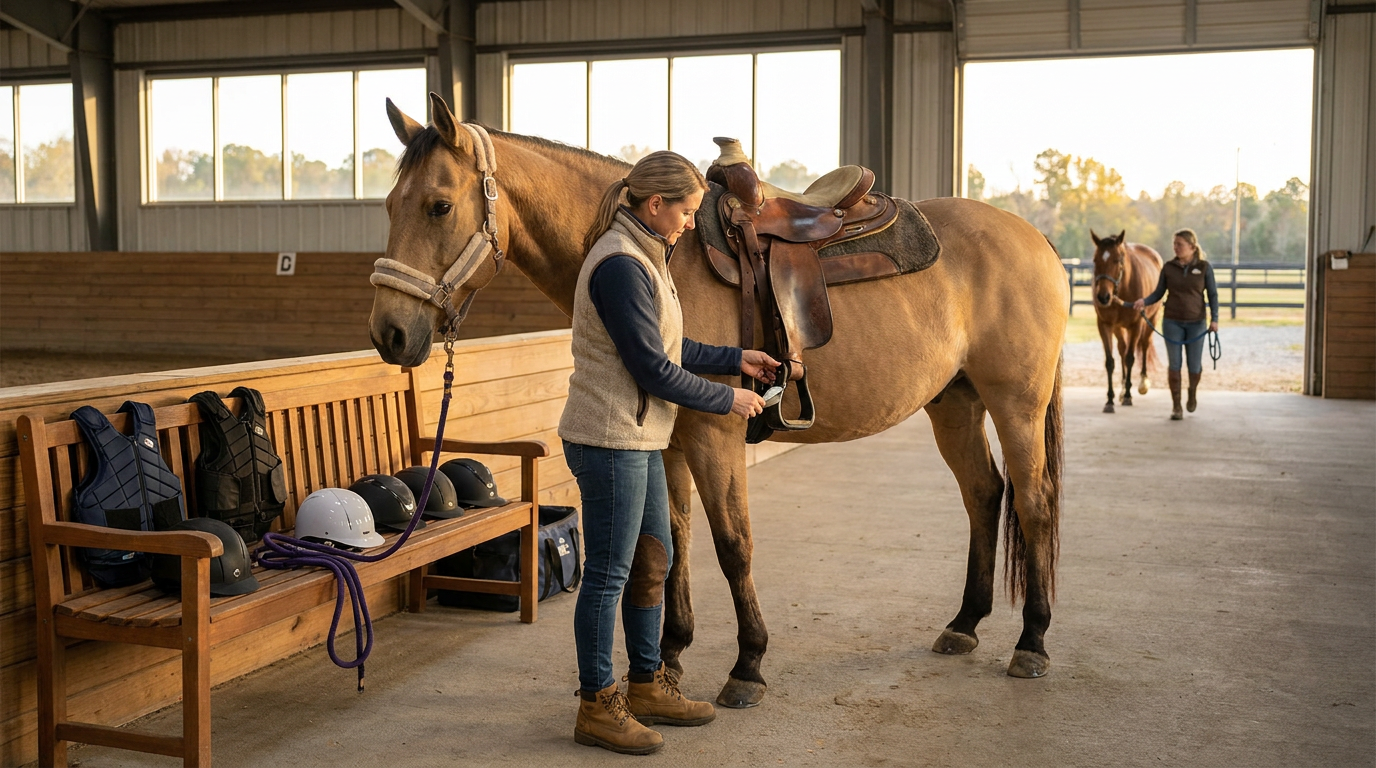
The right helmet creates confidence without feeling like a clinical device. Many participants arrive at sessions feeling anxious about wearing protective gear that reminds them of medical environments or past traumas. Lightweight helmets with adjustable ventilation systems help clients feel comfortable rather than restricted during their therapeutic work.
Adaptive padding systems work particularly well for participants with sensory processing differences. Some riders need extra cushioning around pressure points, while others require minimal contact to avoid overstimulation. Modular helmet designs allow therapists to customize protection levels based on individual needs without drawing attention to differences between participants.
Color choices matter more than most programs realize. Neutral tones like navy or forest green feel less clinical than bright safety colors, helping participants focus on their therapeutic goals rather than feeling singled out. Some facilities in Ridgecrest have found that offering color choices gives participants a sense of control from the very first session.
Mounting Aids That Preserve Dignity and Independence
Traditional mounting blocks often create barriers to emotional safety because they highlight physical limitations. Adjustable ramp systems allow participants to board horses at their own pace without assistance, maintaining dignity while ensuring safety. These systems work particularly well for clients dealing with mobility challenges or those who need extra time to feel secure.
Portable mounting platforms give therapists flexibility to position aids where participants feel most comfortable. Rather than forcing someone to use equipment in a predetermined location, moveable systems let clients choose their preferred mounting spot within the arena. This simple choice often reduces pre-session anxiety significantly.
Hidden assistance features make the biggest difference for emotional comfort. Handholds integrated into mounting aids provide security without looking like medical equipment. Subtle grip strips on platforms prevent slipping while maintaining the appearance of standard equestrian gear. When treatment team specialists select equipment that blends naturally into the environment, participants feel less stigmatized about needing support.
Specialized Saddles and Positioning Equipment
Therapeutic saddles bridge the gap between safety and natural riding experiences. Deep-seat designs provide security for participants with balance concerns while still allowing proper communication with the horse. Unlike medical positioning devices, quality therapeutic saddles look and feel like traditional equestrian equipment.
Adjustable stirrup systems accommodate different leg lengths and mobility levels without requiring multiple saddle changes during sessions. Quick-release mechanisms ensure safety while remaining discreet enough to avoid drawing attention to individual modifications. These features become particularly important when working with military families who might feel uncomfortable with obvious adaptations.
Saddle pad selection affects both horse comfort and participant confidence. Gel-core pads distribute weight more evenly, creating a smoother ride for sensitive participants while protecting the horse’s back during longer sessions. Natural fiber options help maintain the authentic equestrian feel that makes equine therapy so effective for emotional healing.
Positioning aids should enhance rather than restrict natural movement. Adjustable back supports provide stability without preventing participants from developing their own balance and core strength. The goal remains helping clients build confidence through authentic interaction with their horses, not creating dependence on equipment.
Emergency Safety Tools That Remain Unobtrusive
Effective safety equipment works invisibly in the background. Wireless communication systems allow therapists to maintain contact with support staff without disrupting the peaceful atmosphere of sessions. Compact emergency horns can alert nearby personnel while producing sounds that horses recognize as normal rather than alarming.
Strategic placement of safety equipment keeps tools accessible without creating visual distractions. Wall-mounted first aid stations blend into arena design when housed in cabinets that match existing structures. Emergency supplies stored in attractive containers maintain the therapeutic environment while ensuring rapid access when needed.
Technology integration enhances safety without feeling intrusive. Heart rate monitors designed to look like standard fitness trackers help therapists monitor participant stress levels during sessions. GPS-enabled devices provide location tracking for outdoor programs while resembling everyday smartwatches rather than medical monitoring equipment.
The most effective emergency protocols operate seamlessly behind the scenes. Staff training focuses on intervention techniques that maintain session flow while addressing safety concerns. When safety measures feel natural rather than clinical, participants stay engaged in their therapeutic work instead of worrying about potential problems. This approach creates the emotional safety that allows real healing to happen between horse and rider.
Environmental Design Elements That Support Emotional Regulation
Arena Layouts That Minimize Overwhelming Stimuli
The design of your arena space directly impacts how participants regulate their emotions during sessions. Clutter creates chaos, and chaos triggers fight-or-flight responses that work against therapeutic goals. Smart arena layouts use simple principles that make a huge difference.
Position mounting blocks, grooming stations, and equipment storage along the arena perimeter rather than scattered throughout the center space. This creates clear pathways and reduces visual noise that might overwhelm sensitive participants. The center remains open for movement and connection work, while essential items stay accessible without creating obstacles.
Traffic flow matters more than you might think. Design entry and exit points that allow participants to observe the space before fully committing to enter. A single entrance forces immediate immersion, while multiple access points give clients control over their approach and retreat options.
Corner spaces naturally feel safer to many participants because they provide visual boundaries on two sides. Position quiet activities like grooming or ground work in these areas, reserving the open center for more dynamic interactions once trust develops.
Barrier Systems That Provide Security Without Isolation
Effective barriers create emotional safety without making participants feel trapped or cut off from support. The key lies in choosing permeable boundaries that allow visual connection while providing physical definition of space.
Round pen panels work better than solid walls because they maintain sightlines to the broader environment. Participants can see their support team, escape routes, and the larger arena context while working within defined boundaries. This visibility reduces anxiety about being confined or isolated during vulnerable moments.
Adjustable barriers let you customize space size based on individual needs and session goals. Some clients need smaller, more contained areas initially, while others feel claustrophobic in tight spaces. Portable panels allow you to modify the environment rather than forcing participants to adapt to rigid structures.
Gate positioning requires careful thought. Place openings where participants can easily see them, and avoid creating spaces with only one exit point. Multiple escape routes, even if they’re not actively used, provide psychological comfort that supports equine therapy effectiveness.
Sensory Considerations in Equipment Placement
Equipment placement affects how participants process sensory information, which directly impacts emotional regulation. Thoughtful positioning reduces sensory overload while supporting therapeutic objectives.
Store grooming tools, tack, and supplies in organized, labeled containers positioned at consistent locations. Predictability helps participants with trauma histories feel more secure, as they know what to expect and where to find things. Visual organization also reduces decision fatigue during sessions.
Consider noise factors when positioning equipment. Metal tools clanging against each other, squeaky wheelbarrows, or rattling containers can trigger startle responses. Use rubber mats under equipment, choose tools with quieter operation, and position noisy items away from primary work areas.
Lighting affects both horses and participants in ways that impact emotional states. Avoid placing reflective equipment where it might create glare or sudden light changes. Position mirrors, if used, to enhance visibility without creating disorienting reflections that might spook horses or distract clients.
Texture variety in equipment and surfaces provides grounding opportunities for participants who benefit from tactile input. Include different materials like smooth wood, textured rubber mats, or natural fiber lead ropes that offer sensory variety without overwhelming sensitive individuals.
Creating Clear Visual Boundaries and Safe Spaces
Visual boundaries help participants understand expectations and feel secure within defined spaces. Clear demarcation between different activity areas supports emotional regulation by reducing ambiguity and providing structure.
Use different colored ground surfaces or natural materials to define zones without creating physical barriers. Sand in one area, rubber mats in another, and grass or gravel in a third creates intuitive boundaries that both horses and participants recognize easily.
Establish designated quiet zones where participants can retreat if they feel overwhelmed. These spaces should be clearly marked, easily accessible, and positioned where clients can still observe sessions while taking a break from direct participation. Simple elements like measurement approaches help track how environmental modifications affect participant comfort levels.
Height variations in equipment and surfaces create natural gathering spots that feel safe and contained. Mounting blocks, hay bales, or simple wooden platforms give participants elevated positions that many find psychologically comforting while maintaining connection to the arena activities.
Sight line management ensures participants can see support staff and exit points from any location within the therapeutic space. Remove or reposition equipment that blocks important visual connections, and maintain clear pathways that don’t require navigation around obstacles during potentially stressful moments.
Communication and Handling Tools That Enhance Connection
Lead Ropes and Ground Work Equipment for Building Trust
The foundation of emotional safety in equine therapy starts with the simplest tools. Lead ropes might seem basic, but choosing the right material and length creates the first connection between participant and horse. Cotton rope feels softer in anxious hands than nylon, while 12-foot lengths give participants enough space to feel safe without losing control.
Ground work equipment builds confidence through predictable interaction patterns. Halters with padded nosebands reduce pressure points that might make horses fidgety, which participants immediately notice. When someone sees their horse relaxed and comfortable, their own stress levels naturally decrease. Simple leather lead ropes with bolt snaps (not chain leads) give participants the tactile feedback they need without overwhelming mechanical complexity.
The key is consistency across sessions. Using the same lead rope color or style helps participants recognize familiar equipment, creating a sense of routine that supports emotional regulation. This predictability becomes especially important for clients dealing with trauma or anxiety disorders.
Voice Amplification Systems for Clear Instruction
Clear communication prevents the anxiety that comes from uncertainty. Portable voice amplification systems work better than shouting across arenas, especially when working with participants who have hearing challenges or attention difficulties. Small wireless headset microphones let instructors maintain their natural speaking voice while ensuring every safety instruction reaches its intended audience.
The equipment choice matters more than you might expect. Systems with noise-canceling features filter out background arena sounds that can distract both horses and participants. Battery-powered units with 8-hour runtime prevent session interruptions, while lightweight designs keep instructors mobile and responsive.
Consider the psychological impact too. When participants can clearly hear instructions without strain, they feel more confident following directions. This reduces the frustration that often builds when someone struggles to understand what’s being asked of them. Clear communication through proper amplification actually enhances the therapeutic relationship rather than creating technological barriers.
Visual Aids and Communication Boards
Visual communication tools bridge gaps where verbal instruction falls short. Laminated cards showing grooming steps help participants who process information better through pictures than words. Simple drawings of brush strokes or hoof-picking techniques give hands-on reference points during activities.
Communication boards with emotion words help participants identify and express feelings that arise during sessions. Cards showing “nervous,” “excited,” “calm,” or “frustrated” give clients vocabulary for discussing their experience without requiring complex emotional articulation. This becomes particularly valuable when working with children or adults who struggle with emotional expression.
Weather-resistant materials keep visual aids functional in outdoor settings around Ridgecrest, where dust and wind can damage paper-based tools. Magnetic boards work well in indoor arenas, while clipboard-mounted visual schedules travel easily between activities. The goal is making information accessible without creating additional stress about damaged or unusable materials.
Grooming Tools as Relationship-Building Equipment
Grooming tools serve dual purposes in therapeutic settings, functioning as both practical equipment and relationship-building instruments. Soft-bristled brushes let nervous participants start with gentle motions, while curry combs provide the deeper pressure that both horses and humans find satisfying. The rhythmic motion of grooming creates natural opportunities for emotional regulation through repetitive, calming activity.
Tool selection impacts the therapeutic process significantly. Rubber curry combs feel less intimidating than metal ones, while naturally bristled brushes connect participants to traditional horsemanship practices. Having multiple brush sizes accommodates different hand strengths and comfort levels, ensuring everyone can participate meaningfully in grooming activities.
Storage systems for grooming tools create ownership and responsibility. Individual grooming kits assigned to specific participants build personal connection with equipment and horses. When someone has “their” brush or curry comb, it becomes part of their therapeutic routine and identity within the program. This ownership feeling enhances engagement and creates positive associations with the therapeutic process.
The tactile experience of quality grooming tools cannot be replicated with cheaper alternatives. Natural materials feel better in hands and work more effectively on horse coats, creating successful grooming experiences that build confidence and competence. When participants see their horse’s coat shining after their grooming work, the sense of accomplishment becomes a powerful therapeutic moment that reinforces their connection to both the horse and the healing process.
Adaptive Equipment Solutions for Diverse Physical and Emotional Needs
Mobility Assistance Equipment That Promotes Participation
The right mobility support creates opportunities rather than barriers. Mounting blocks with adjustable heights accommodate wheelchairs and walkers without drawing attention to physical differences. These blocks often feature multiple platform levels (typically 12, 18, and 24 inches) that allow participants to choose their comfort zone.
Therapeutic saddles with high backs and deep seats provide security without feeling restrictive. The key is finding equipment that supports without announcing itself. A well-designed therapeutic saddle feels natural to both horse and rider, creating confidence through stability rather than obvious accommodation.
Grab straps and safety stirrups serve dual purposes in emotional safety. They provide physical security while giving participants control over their own support level. Someone might start a session gripping the strap tightly, then gradually release as trust builds. This progression becomes a visible marker of growing comfort and connection.
Side walkers benefit from positioning aids that keep them close without crowding. Adjustable lead ropes and communication systems help staff provide seamless support. The goal is assistance that feels collaborative rather than protective, maintaining dignity while ensuring safety.
Sensory-Friendly Gear for Participants with Processing Differences
Sensory processing considerations shape every equipment choice. Soft-touch materials on reins and halters reduce overwhelming textures that might trigger defensive responses. Natural fibers often work better than synthetic materials, which can feel harsh or create static sensations.
Color choices matter more than most realize. Bright, contrasting colors can overwhelm sensitive individuals, while muted earth tones typically feel calming. Some programs use color-coded equipment systems where each participant develops familiarity with specific hues that feel safe and recognizable.
Sound-dampening equipment reduces auditory stress. Padded buckles, quiet snap closures, and rubber-coated metal pieces minimize sharp noises that might startle sensitive participants. Even something as simple as bell boots can be modified with softer materials to reduce noise without compromising function.
Weighted items like lap pads or weighted reins provide proprioceptive input that helps some participants feel more grounded. These tools work particularly well during grooming activities, where the gentle pressure creates a sense of security and body awareness. The weight distribution helps participants stay present and connected to the moment.
Customizable Equipment for Individual Comfort Preferences
Flexibility in equipment setup acknowledges that comfort looks different for everyone. Adjustable stirrup lengths that change easily during sessions allow participants to modify their position as comfort levels shift. Someone might need shorter stirrups initially for security, then prefer longer ones as confidence grows.
Modular pad systems let participants customize their saddle feel without changing the entire setup. Additional padding layers, different textures, or varying thicknesses help individuals find their optimal comfort zone. This customization often becomes part of the therapeutic process itself.
Rein options multiply choice and control. Some participants prefer traditional leather reins, others feel more secure with rubber grips, and still others benefit from loop reins that won’t slip from their hands. Having multiple options available normalizes individual needs and preferences.
Personal equipment storage creates ownership and routine. When participants have designated spaces for their preferred helmet, gloves, or other gear, it builds anticipation and investment in sessions. This small detail often significantly impacts engagement levels and emotional investment in the process.
Equipment Modifications for Trauma-Informed Practice
Trauma-informed equipment choices prioritize participant choice and control. Quick-release mechanisms on everything from safety straps to lead ropes ensure that participants never feel trapped. The knowledge that they can disconnect quickly if needed actually reduces the likelihood they’ll need to use that option.
Transparent equipment policies help participants understand exactly what each piece does and why it’s there. Explaining the function of every strap, buckle, and safety feature reduces anxiety about unknown elements. Knowledge creates agency, and agency builds trust in therapeutic relationships.
Graduated equipment introduction respects individual readiness levels. Starting with minimal gear and adding pieces only as participants express interest prevents overwhelming someone early in their therapeutic journey. This approach recognizes that safety equipment can initially feel threatening to trauma survivors.
Choice in safety equipment empowers participants while maintaining standards. Offering helmet styles, color options, or different closure types gives individuals control over their appearance and comfort. When participants have input in safety decisions, they’re more likely to cooperate with and appreciate protective measures throughout their therapeutic experience.
Staff Equipment and Training Tools That Model Safety
Professional Safety Gear That Instills Confidence
The equipment staff members wear and carry directly influences how participants perceive safety in equine therapy sessions. Professional-grade helmets that meet current safety standards signal competence without creating intimidating barriers between staff and clients. Many programs in Ridgecrest have found that choosing helmets in calm colors rather than high-visibility options creates a more approachable atmosphere while maintaining protection.
Proper footwear becomes equally important as a confidence-building tool. Steel-toed boots protect staff from accidental horse contact, but the psychological impact matters just as much. When participants observe that their therapist takes safety seriously through appropriate gear, it actually reduces anxiety about potential risks. Body protectors designed for equine work provide another layer of professional credibility that translates into emotional safety for clients.
Radio communication systems worn discretely allow staff to maintain contact with support personnel without disrupting the therapeutic atmosphere. Modern lightweight headsets enable immediate response capabilities while keeping sessions focused on the human-horse connection rather than emergency concerns.
Emergency Response Equipment and Protocols
Strategic placement of emergency equipment creates safety nets that participants rarely notice but always benefit from. First aid stations positioned at arena entry points provide immediate access to basic medical supplies without creating obvious reminders of potential dangers. These stations work best when integrated into natural storage areas that blend with the environment.
Emergency contact protocols require specific equipment that staff can access quickly without alarming participants. Laminated emergency cards carried in staff pockets contain essential medical information and contact numbers, while backup communication devices ensure connectivity even when primary systems fail. The key lies in having these tools immediately available without making them prominent features of the therapeutic space.
Staff training on emergency equipment usage must happen regularly to maintain confidence levels. When therapists feel completely prepared to handle unexpected situations, that assurance transfers directly to participants through subtle body language and vocal tone changes. Emergency drills conducted outside of session times help therapeutic riding programs maintain readiness without disrupting the healing environment.
Documentation Tools for Tracking Emotional Progress
Digital tablets designed for outdoor use enable real-time documentation without breaking therapeutic momentum. Weather-resistant cases protect devices while allowing staff to capture behavioral observations, emotional breakthroughs, and session notes immediately rather than relying on later recall. This immediate documentation often reveals patterns that might otherwise go unnoticed.
Standardized assessment forms loaded onto these devices help track emotional progress through measurable indicators. Simple rating scales for anxiety levels, communication attempts, and engagement quality provide concrete data about participant development over time. The ability to add photos and brief video clips creates richer documentation that supports treatment planning.
Voice recording capabilities allow therapists to capture exact quotes or significant verbal interactions without taking attention away from the participant. These recordings become valuable tools for identifying breakthrough moments and understanding communication patterns that develop between clients and horses during sessions.
Ongoing Equipment Assessment and Replacement Standards
Regular equipment audits ensure that all safety gear maintains its protective capabilities and professional appearance. Monthly inspections of helmets, protective vests, and emergency equipment identify wear patterns before they compromise safety or confidence. Documented replacement schedules prevent situations where worn equipment undermines the professional atmosphere essential for emotional safety.
Participant feedback systems help identify equipment that creates unintended barriers to therapeutic progress. Exit surveys and informal conversations often reveal that certain pieces of safety gear felt intimidating or uncomfortable, providing insights that guide future equipment choices. This feedback loop ensures that safety measures support rather than hinder emotional healing.
Technology updates require careful consideration of how new equipment affects the therapeutic environment. While newer safety gear often provides better protection, the transition process must maintain continuity for regular participants who find comfort in familiar routines and visual cues.
Creating emotional safety through thoughtful equipment choices requires balancing protection with approachability, ensuring that every tool serves both physical and psychological well-being. Programs that invest in comprehensive staff training, appropriate safety gear, and regular equipment assessment create environments where participants can focus entirely on their healing journey. For organizations ready to enhance their therapeutic programs through strategic equipment planning, connecting with experienced equine therapy providers offers valuable insights into building truly safe and effective healing spaces.
Related Posts
- Programs, People, and Purpose: How THOR Serves Ridgecrest with Horse-Powered Therapy
- Healing Through Hoofbeats: The Origins and Impact of THOR in Ridgecrest
- From Stall to Support: The Future of THOR and Its Role in Ridgecrest’s Evolving Care Landscape
- March Forward with Confidence Why Now is the Perfect Time to Start PTSD Treatment
- Indoor vs Outdoor Equine Sessions Adapting PTSD Therapy Programs for Every Season
- Creating Your PTSD Treatment Team How to Partner with Equine Therapy Specialists
- The Science Behind Horse Therapy What Clinic Directors Need to Know About Measuring Success
- Why March Weather Changes Can Trigger PTSD Symptoms and How Equine Therapy Helps
